A Shelf of Small Christmases: Planning a 1:12 Advent House in Three Weeks
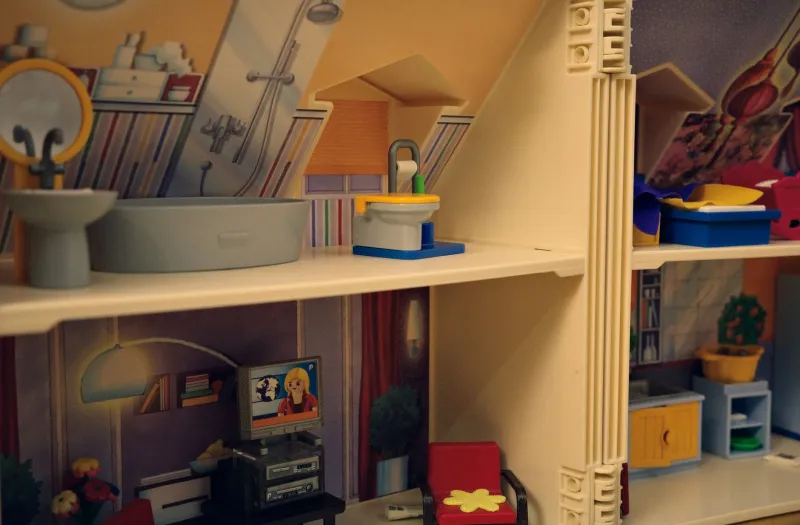
An Advent calendar is meant to be a small daily pleasure. A 1:12 Advent house can easily become a second job, complete with tiny skirting boards, fiddly wiring and a nervous breakdown in the craft room. The fix is not to lower your standards. It is to lower the number of walls. Build a house-shaped framework with 24 shallow scenes, not 24 complete rooms. You are making a theatre set, not a terrace.
With Advent Sunday falling on 29 November in 2026 and 1 December landing on the Tuesday, there is still time to make something charming without turning December into a glue-and-panic marathon. The trick is to decide now that the house is a shelf of small Christmases, revealed one door at a time.
Start with the shape, not the story
A 6 x 4 grid of cubbies is easy to read on a shelf and easy to build. Each compartment might be 10cm wide, 8cm high and 6cm deep — shallow enough to suggest a room without demanding a full ceiling, back wall and floor. Foam board or mount board makes a sturdy carcass; cereal packets are fine for internal dividers if you double them up and paint both sides. If you want more theatre, build a dolls' house facade with 24 opening doors, but be honest about the extra time. Hinged doors are lovely. Hinged doors on 24 compartments are a commitment.
Draw the whole thing before you cut anything. Sketch the 24 scenes as thumbnail squares, number them, and check that each one can be told with three or four objects. A tiny postbox with a few cards is a scene. A full replica of a Royal Mail sorting office is not. The same goes for the Christmas dinner: a plate, a cracker and a sprout on a fork will read instantly at 1:12. A full turkey with all the trimmings will eat your weekend.
The three-week schedule that leaves room for mince pies
From 11 November you have roughly three weeks. Use them in batches, not night-by-night.
11–15 November: plan and gather. Choose the footprint, sketch the 24 vignettes and write a cutting list. Raid the recycling bin for cereal packets, matchboxes and clean food packaging. Check your stash of paints, PVA, mount board and blades. Try not to buy anything new after 20 November; late-night craft shopping is where Advent projects go to die.
16–20 November: build the carcass. Cut the foam board, assemble the grid and give it a coat of primer or emulsion. Make the 24 door blanks at the same time. If you are using matchboxes as individual rooms, build them in one sitting and label the backs with pencil.
21–25 November: decorate in batches. Do not decorate one room from start to finish and then start the next. Paint all the floors, then all the walls, then add all the skirting if you are using it. Make props in production lines: a row of tiny books, a batch of parcels, a dozen mince pies cut from polymer clay or painted card. Four to six interiors an evening is realistic; twenty-four in one night is how people end up hating tinsel.
26–28 November: doors, numbers and a dry run. Fit the doors, add numbers with rub-down transfers or a fine stamp, and check that each scene is visible when the door opens. Add lighting only if it is simple: a battery fairy light tucked behind frosted windows, or a single LED tealight shared by a group of cubbies. Do not wire every room unless you genuinely enjoy that sort of thing.
29–30 November: buffer and rest. Label each day's props in small paper bags or envelopes. Do a final dry run, then close the doors and leave it alone. The buffer is not laziness; it is the difference between an Advent house and an Advent incident.
Cheap materials that do not look cheap
Foam board, mount board, cereal packets, matchboxes, coffee stirrers, paper straws, cake doilies, fabric scraps, beads, old Christmas cards and charity-shop jewellery all earn their keep at 1:12. Tea-stained paper makes decent wallpaper and printed wrapping paper. A scrap of velvet becomes a curtains. A ring-pull from a can, painted gold, is a tiny door knocker or a picture frame. PVA and acrylic paint will do most of the heavy lifting.
For UK Christmas traditions, think small and specific: a postbox stuffed with cards, a mince pie and a glass of sherry, stockings hung on a radiator, a Christmas cracker pulled in two, a bowl of sprouts, the King's Speech on a tiny television, carol singers under a street lamp, mulled wine on a hob, a Boxing Day walk with a tiny muddy boot, a panto ticket on a hall table. Any one of those is a scene. Repeat with variations and you have 24.
The rules that keep it joyful
One scene, one story, three objects. No new techniques after 20 November. No working lights in every room. Store each day's props in labelled bags so December is a series of reveals, not a search party. Accept that a wonky floor is charm, not failure. And if you fall behind, use a quiet door: a closed door with a tiny wreath and a note saying "back tomorrow", or a scene of a cat asleep by a radiator. Advent is not a deadline; it is a countdown.
The final dry run matters more than the final flourish. Open every door, check the numbers, make sure the postbox scene is behind door seven and not door seventeen. Then close it up and wait. The pleasure of a 1:12 Advent house is not in the nightly glue gun. It is in opening a small door after a long day and finding a tiny, complete Christmas inside.