Dwarf Wall, Cold Glass, Warm Mug: Putting a Proper British Conservatory at 1:12

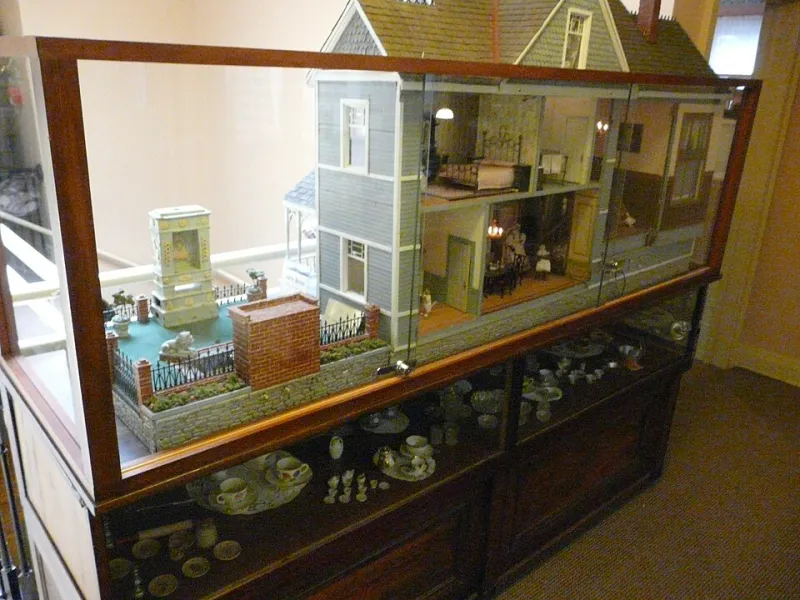
Photo: miniature dollhouse conservatory sunroom rattan chair spider plant glazing bars, via cooldeepseacreatures.weebly.com
A conservatory is a strange little room. It is not the garden, but it is not properly the house either. On a bright November morning it is the best seat in the place; by four o'clock it is a cold glass corridor with a spider plant and a stack of old crossword puzzles. That in-between quality is what makes it such a gift at one twelfth scale. Build it well and it adds a whole extra mood to a miniature home. Build it badly and it looks like a fish tank with a door.
Start With the Awkward Bit: The Dwarf Wall
The dwarf wall is the conservatory's anchor. In real British homes it is usually somewhere between 60cm and 90cm high, which translates to roughly 5cm to 7.5cm at 1:12. Do not skip it and run glass straight to the floor unless you are deliberately modelling a very modern garden room. The dwarf wall gives the room its slightly provisional, add-on character, and it gives you somewhere practical to hide the join between house and extension.
I like to build it from stripwood or foam board with a brick-paper face, capped with a thin strip of painted card for the sill. Keep the wall a touch proud of the house wall. Real conservatories are rarely flush; they butt up against the original building with a bead of sealant and a bit of hopefulness. That small step in the facade is one of the details that makes the whole thing read as a later addition rather than part of the original architect's grand plan.
Glazing Bars and the British Light
British conservatory light is not clean Mediterranean light. It is pale, slightly green, and filtered through more glazing bars than strictly necessary. Use 2mm stripwood or styrene for the bars, and do not make them too neat. A tiny variation in spacing suggests a joinery firm doing its best rather than a laser cutter showing off.
For glazing, 1mm clear acrylic is the practical choice. It will not shatter, it cleans up easily and it catches the light nicely. If you want an older, slightly wavy look, use acetate sheet from craft packaging instead. Fix it behind the bars rather than in front, so the frame casts its little shadows onto the glass. That shadow line is what sells the scale.
A lean-to roof is the most recognisably British shape: shallow pitch, a row of glazing bars, and a gutter that looks as if it has seen better days. Add a thin brass or styrene gutter along the eaves and a downpipe at one end. It is a tiny detail, but it stops the roof floating and gives the eye somewhere to finish.
Condensation Is Not a Fault
A perfectly clear conservatory window is a missed opportunity. Real ones steam up at the edges after a cold night, especially if someone has been making tea in there. Do not fog the whole pane. Use a very thin wash of matt varnish around the frame edges, or dry-brush a little white acrylic thinned almost to nothing along the bottom corners. Finish with a faint swipe mark from a cloth. The message is not damp; the message is use.
If you want to suggest a cold morning, add a tiny drip of clear resin on the inner sill. It should be barely visible. The moment it looks like a miniature water feature, you have gone too far.
Furniture That Has Given Up Being Indoor
Conservatory furniture in a British home is usually furniture that has been demoted. A rattan chair with a faded cushion, a small bamboo table, a footstool that has followed the family through three houses. This is good news for the miniaturist, because rattan is easy to fake. Thin paper twine wrapped around wire, fine cane from a garden centre, or even a scrap of woven placemat can all be cut and bent into a convincing chair back. Paint it a chalky off-white and sand the edges lightly.
Keep the upholstery sun-faded rather than cheerful. A cushion in washed-out chintz, a seat pad that has gone slightly grey at the front, a mug ring on the table: these are the marks of a room that gets used for eleven months of the year and then becomes a storage space for tomato plants.
Plants, Crosswords and the Door That Will Not Shut
A conservatory needs plants, but not a jungle. A spider plant is almost compulsory. Make one from green paper strips, fine wire and a small terracotta pot; let a couple of runners dangle over the edge of a shelf. Add a tray of seedlings on the windowsill using a balsa tray, a sprinkle of coffee grounds for compost and tiny slivers of green card for the shoots. Put a pencil nearby. It suggests someone is trying to be organised.
Then add the human clutter. A sun-faded crossword left on the chair, half finished. A pair of secateurs. A radio with a bent aerial. A dog bowl by the door. And, best of all, a door that never quite shuts. Offset the latch by a millimetre, or leave the hinge pin slightly proud so the door sits ajar. It gives the room an air of being in transit, which is exactly what a conservatory is.
The Joins Are the Story
Do not hide the fact that the conservatory is an addition. Let the skirting board stop awkwardly at the junction with the house. Give the floor a slightly different level or a different tile. Add a bead of white sealant along the join, slightly yellowed. These are not mistakes; they are the architectural equivalent of a family photograph where everyone is standing slightly wrong.
A 1:12 conservatory earns its place when it looks like a room that was built with optimism and has been lived in with compromise. Dwarf wall, cold glass, warm mug. That is the whole trick.