Raid the Shed, Not the Model Shop: Twelve Everyday Items That Earn Their Keep at 1:12
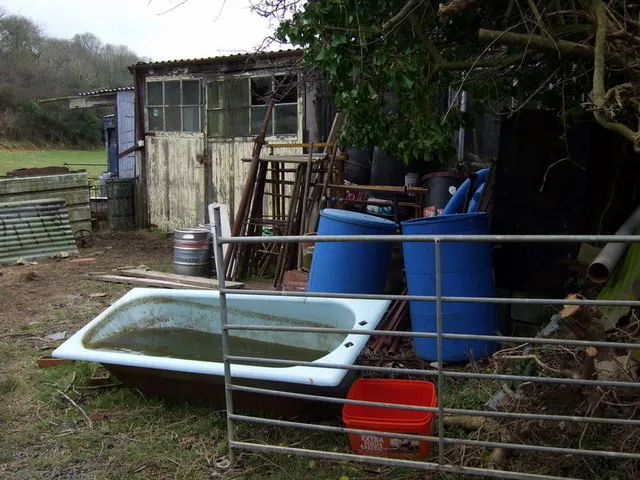
Photo: ceridwen, CC BY-SA 2.0, via Wikimedia Commons
The model shop near me is a lovely place, and I say that as someone who has spent a shameful amount of money in it. But it will happily charge you nine quid for a sanding stick, which is a lolly stick with sandpaper glued to it by a man who has since retired.
Meanwhile, at the bottom of the garden, there is a shed that has been assembling a full toolkit in a coffee tin since roughly 1998. If you are new to 1:12 and you are staring at a shopping basket wondering how a hobby got this expensive, go and look in there first.
Here are twelve things that live in a British shed or garage, what each one replaces on the miniature bench, and — because I am not a monster — where the cheap option stops working and you should actually pay.
Twelve in, twelve out
1. The glass nail file
The sort that comes in a pack of four from the supermarket for about £2.50. Finer than most sanding sticks, flexible enough to follow a curve, and it does not shed grit all over the carpet. Use it to clean up styrene edges, true a skirting board, or sand the inside of a window reveal where nothing bigger will fit. Rinse it and it will outlive you.
2. Emery boards
Same idea, more aggressive. A coarse emery board is a decent stand-in for a sanding block when you are shaping foam or knocking the fuzz off a plywood edge. Keep a fresh one for final passes and a grim one for rough work, exactly as you would with paper.
3. Florist's wire
The green stuff on a roll, from the garden centre, or from the back of the shed where somebody made a wreath in 2011. Twenty-gauge florist's wire is the best cheap armature in the business: plant stems, a pelmet that needs to hold a shape, the inner structure of a tiny hat, the handle of a miniature trug. Straightened and cut, it also makes passable hinges, curtain rails and the springs under a model sofa.
4. Silicone sealant and a bag of cornflour
The weird one, and the most useful. Knead ordinary one-part bathroom silicone with cornflour — roughly one part cornflour to one part sealant, wet fingers, keep going until it stops being sticky — and you get a putty you can press over a master to make a shallow push mould. Set a brick, a paving slab, a tin tack or a resin ornament under it, leave it overnight, and you have a reusable mould for a fraction of a proper moulding kit.
It is not a substitute for silicone rubber on anything deep or undercut, and it smells like a swimming pool, so do it with the window open. But for flat-ish textures it is genuinely brilliant, and it is the single best value trick in this list.
5. Clothes pegs
Spring pegs are clamps. Wooden dolly pegs, snapped in half and sanded, are table legs, newel posts and chimney pots. Plastic pegs hold a pair of clamps together while the glue goes off. Anyone building a 1:12 chair frame needs eight of them and has never once thought of the washing line.
6. Bulldog clips
Technically stationery, but there is always a jam jar of them in the shed. The tiny 19mm ones are ideal for holding two walls square while PVA grabs. They also make a serviceable stand for a model bicycle frame, and clipped to the bench edge they hold a wet-painted piece off the surface.
7. Cocktail sticks and kebab skewers
Applicators, dowels, glue pots, drainpipes, scaffold poles, garden gates, window mullions. Sand the point off a cocktail stick and it becomes a perfectly good miniature broom handle; a skewer, at roughly six inches of bamboo, is a whole-scale sweeping brush for the street outside.
8. Masking tape
Low-tack tape is the cheat for everything: holding a brick template down, marking out a floor plan on the bench, temporarily hinging a door while you work out its swing, and lifting dust off a delicate piece (pat, do not wipe). The posh stuff is better behaved, but the shed roll is fine.
9. Lids from takeaway tubs
Clear, slightly flexible, free. Cut with scissors and you have glazing for anything that is not a main feature: shed panes, outbuilding windows, a cold frame in a 1:12 garden. Buy real glazing for the front window; use this for the greenhouse at the end of the plot.
10. Splinter tweezers
The angled ones in the first aid tin. Not as fine as modelling tweezers, but they will place a 1:12 door knob and hold a bit of trim while the glue sets. Do not put them back in the first aid tin after they have been in the paint water.
11. Panel pins and brass paper fasteners
A 20mm panel pin is a two-foot spike at 1:12, which makes it exactly right for a gatepost, a fence post or a hearth poker. Brass paper fasteners, unfolded, become drawer handles, cupboard knobs, curtain finials and the legs of a tiny coffee table — and you get ninety for the price of a coffee.
12. Wire wool and a stub of beeswax
Fine wire wool takes the fuzz off a sanded wooden edge and gives a soft burnish to a painted surface. Beeswax on a screw thread keeps a hinge moving; on a blade it stops the blade dragging through foam. Rubbed into a miniature floor, it makes the boards look as though they have been polished for forty years — more than most of us can say for our actual floors.
Where the false economy lives
Cheap substitutes work best on consumables, jigs and one-off jobs. They work worst on anything that touches accuracy or your own fingers.
Spend the money on: a proper scalpel handle and a steady supply of good blades (a blunt blade causes slips, not a cheap one), a steel rule marked in millimetres, a cutting mat that stays flat, and one or two brushes that actually hold a point. Buy a fine glue applicator or a pack of nozzles for your PVA, and buy a good lamp — you cannot build 1:12 by squinting.
Do not buy a £40 scale ruler until you have finished something. Do buy a cheap digital caliper, because 12mm and 12.4mm are the same thing right up until the staircase will not fit.
The real lesson of the shed
Most of the cost of this hobby is not tools. It is the belief that the tools are the hobby. The shed is a useful antidote: it says you can start with a nail file and a clothes peg and end up with a staircase that works.
Go and look in the coffee tin. There is probably a whole workshop in there.