Stall of the Season: A Weekend Build for a 1:12 Christmas Market Stall
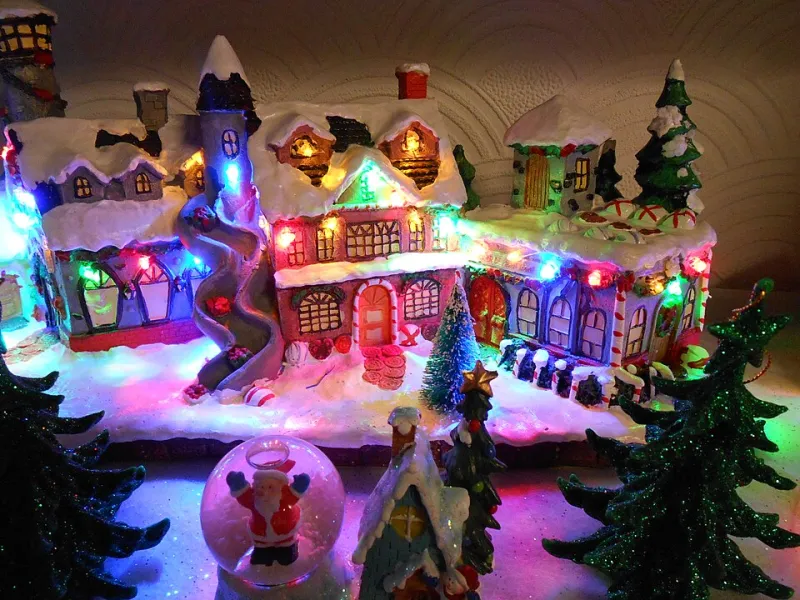
Photo: Rept0n1x, CC BY-SA 3.0, via Wikimedia Commons
There's a particular moment in early November when the barriers go up in the pedestrianised bit of town and a small village of timber huts appears overnight. Fake snow on the roofline, a chalkboard sign flapping, someone already selling bratwurst at nine in the morning. It's the most buildable scene in the whole festive calendar — open-fronted, small in footprint, and absolutely loaded with tiny detail opportunities. Which makes it the ideal project for a Saturday and Sunday at the dining table.
This is a one-twelfth stall with a footprint of roughly 20cm by 15cm. Big enough to hold a counter, a couple of crates and a dozen cups of something warm. Small enough not to become a three-month commitment you abandon in February.
Why a stall beats a house for a winter project
A dollhouse swallows time because it has an inside. Rooms, staircases, wallpaper that needs to line up, doors that must actually close. A market stall has none of that. It's four posts, a counter, a roof and a bit of theatre. You get the satisfaction of a finished scene in about fourteen working hours, and because it's a display piece rather than a furnished interior, nobody is going to peer inside and ask why the skirting board doesn't meet the floor.
The other advantage is seasonal flexibility. Build it now, dress it now, photograph it in front of a pretend snowy pavement — then dismantle it and put it in a Really Useful Box before the decorations come down.
Saturday morning: what to buy, and where
Most of this is available on a normal high street run rather than a specialist order.
- Timber: 6mm square pine stripwood, sold in 900mm lengths in the moulding aisle at B&Q or Wickes. Cheap, straight enough, and takes paint well. If you want finer grain, order basswood from 4D Model Shop or Balsa Cabin and save it for the counter top.
- Glue: Evo-Stik wood adhesive for the frame, plus a tacky PVA for everything else. Grab a pack of masking tape — it's your third hand.
- Awning fabric: a fat quarter from Dunelm, or a charity-shop shirt in red-and-white stripes. A shirt gives you far more fabric than you need for about two quid.
- Lights: warm-white copper micro wire lights on a CR2032 button cell. Poundland, The Range and most garden centres stock them from October. Buy two sets; one will die.
- Dressing: air-dry clay, seed beads, cocktail sticks, chalk pastels, a bag of bicarbonate of soda, and a small pot of gloss gel medium from an art shop.
Tools: a razor saw, a small mitre box, a scalpel, needle files, tweezers, pinking shears.
Saturday morning: framing it up
Cut four posts at 22cm and four at 18cm. Assemble two side frames first — a short post, a tall post, one cross rail near the top — and check them against each other before the glue grabs. Lay them flat on greaseproof paper, weight them with a tin of beans, and walk away for forty minutes. This is the bit people rush, and it's the bit that decides whether the stall sits level.
Join the two sides with front and back rails. The back posts should be taller so the awning slopes forward and sheds imaginary snow — a 4cm drop over 15cm looks right at this scale, and anything more dramatic starts to read as a beach hut.
Add corner braces from 3mm balsa. They won't be seen, but they'll stop the whole thing racking every time you move it.
Saturday afternoon: awning, counter, crates
Cut the awning as a single strip, long enough to overhang the front by 2cm. Hem the front edge with pinking shears to get a scalloped valance in one go — no measuring, no template, and the zigzag edge reads exactly like fabric at this scale. Glue the back edge to a 3mm dowel, pin the dowel to the back posts, and let the front edge curl slightly downwards over a rolling pin overnight.
For the counter, use two thicknesses of basswood laminated together. Real market counters are battered, so sand a couple of shallow dips into the front edge before painting. Then build two balsa crates from coffee stirrers, staining them with heavily diluted brown acrylic so the grain shows through.
Sunday: dressing the stall
The temptation is to fill it. Don't. A stall that reads as busy needs a clear focal point, then clutter in the background.
For the mulled wine, snip the heads off round-headed pins and paint them amber, then seat each one in a bead cap for a goblet. A wisp of teased cotton wool above each cup suggests steam — use the tiniest amount, and set it with a light mist of hairspray so it doesn't flop.
Mince pies: tan polymer clay discs, 8mm across, with a small star cut from the top and a dusting of fine brown chalk pastel. Gingerbread hearts hang from a length of florist's wire across the front opening. A chalkboard menu is a scrap of mountboard with brush lettering, and it's worth doing that lettering at full size first and then copying what works.
Winter weathering that actually reads
Scale is where weathering goes wrong. Mud that looks subtle on a real hut is a landslide in miniature, so work in thin layers and stop early.
Start with a dry brush of mid-grey along the bottom 2cm of every post. Follow with a wash of diluted grey-brown in the inside corners. Then rub a soft pastel stick on sandpaper and brush the powder around the feet and the counter edge. If you want slush on the base, stipple gloss gel medium thinly and leave it — it dries to something convincingly half-melted.
Snow: forget flocking the whole roof. Put snow where snow actually sits — the top edge of the awning, the back of the ridge, the tops of the crates. A 50/50 mix of bicarbonate of soda and fine white powder, fixed with hairspray, is the cheap version and it photographs well.
Lighting without the tangle
Run the copper wire up the inside of one back post, tape it, and let it drape across the awning in a shallow swag. Put the battery box inside a false cupboard under the counter with a removable back panel — you want to change the battery without dismantling your own work. If the LEDs read too cool against your warm interior, a whisper of amber glass paint on each bead does the job.
Packing it away in January
Build for dismantling from the start. Don't glue the stall to its base — use two short dowel pins in the feet and matching holes in the baseboard. Fix the crates and counter with small magnets rather than adhesive. Store dressing in labelled takeaway tubs with a sachet of silica gel, and photograph the finished scene from three angles before you take it apart, because next November you'll want the reference.
Then put it away on Twelfth Night, which feels like the right date for a site called One Twelfth Scale, and start thinking about what the stall sells next year.