Vinegar on the Nose, Queue at the Door: A 1:12 Chippy That Feels Like Friday
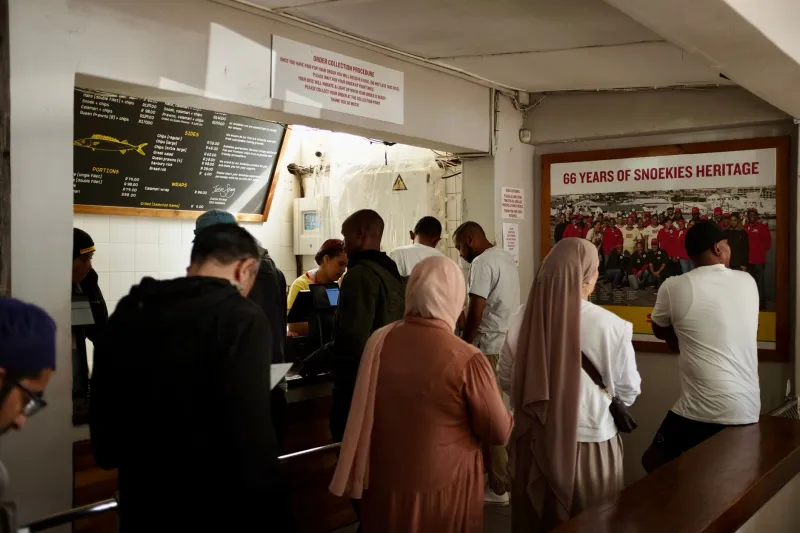
There is a particular sound a chip shop makes on a Friday: the extractor fan doing its low, tired roar, the clatter of the metal scoop against the hot cabinet, the rustle of paper as another portion is wrapped. At one-twelfth scale you cannot hear any of it, which is exactly why you have to build the suggestion of it into everything you can see. A convincing 1:12 chippy is not a display of tiny fish. It is a small piece of High Street theatre.
Start with the counter, not the fish
The counter is the first thing anyone sees and the last thing they lean on. In a real chippy it is usually a workmanlike slab of laminate, often pretending to be formica, with an aluminium or plastic edge trim and a few year-old chips in the corner. Build yours from a sheet of 1mm plastic card or an offcut of veneer, then give it a light sanding in the places hands would go. A strip of half-round styrene makes a convincing edge trim. Paint it a slightly yellowed cream or a faded grey-green, then seal it with satin varnish. Gloss is wrong here; chip shops are shiny only where they are greasy.
Behind the counter, keep the layout tight. A small back wall of wipe-clean panels, a shelf for the salt and vinegar, a stack of paper squares, a till that looks like it has had a hard life. The tighter the counter area, the more the queue outside feels justified.
Build the fryer range as a block of heat
You do not need a fully plumbed miniature range. You need a shape that reads as stainless steel, a dark recess where the fryer baskets sit, and a glow that says something is cooking. A box of 2mm plastic card, sprayed with grey primer and then a chrome-effect pen, will do for the body. Cut two or three basket shapes from fine mesh or tulle and hang them from wire handles. Add a back panel of brushed aluminium-effect card and a thin strip of warm white LED along the underside of the extractor hood.
Condensation is the detail that sells it. On the inside of your shop windows, brush a very thin layer of gloss Mod Podge or clear resin and stipple it with a cocktail stick before it dries. Do not overdo it. You want the suggestion of steam, not a aquarium. A faint smear of white pastel around the edges of the glass helps too.
Vinegar pumps, salt shakers and the eternal queue barrier
The small props are where a chippy becomes a place. Vinegar pumps can be made from short lengths of styrene tube with a tiny handle bent from wire. Paint the body clear amber or brown, add a white label, and fix them to the counter with a dab of superglue. Salt shakers are simply two tiny cylinders with a pinprick pattern on the lid. Paper-wrapped portions are squares of thin tissue paper, crumpled, twisted at the ends and set beside the till.
Then there is the queue barrier. Those chrome posts and retractable black straps are the unsung heroes of the British takeaway. Make two posts from 3mm aluminium tube with a small base, then run a strip of black electrical tape between them at waist height. If you want to suggest a queue, a couple of tiny figures standing patiently will do more than a crowd. One adult, one child, maybe a folded umbrella. The barrier is not glamorous, and that is the point.
Light it like a Friday night
Chip shop lighting is not mood lighting. It is strip lights, a warm glow from the hot cabinet, and the cold blue-white of a fridge. Use a warm white LED strip under the extractor hood, a cooler white one inside the serving area, and a small amber LED behind the hot cabinet. Keep the exterior sign lit separately, ideally with a slightly greenish white to suggest an old fluorescent tube. If your shop has a window, a thin sheet of acetate with a few tiny water droplets fixed in place will catch the light and make the whole thing feel humid.
Signage you can almost smell
Hand-lettered signage is the difference between a model and a memory. A simple white board with black lettering, slightly uneven, reads more convincingly than a perfect vinyl print. Use a fine brush or a 0.05 pen, and resist the urge to make every letter the same height. Add a chalkboard for the specials, a laminated hygiene rating sticker, and a small notice about card payments. These are the visual equivalents of the extractor fan: ordinary, specific, and completely convincing.
A short materials list
- 1mm and 2mm plastic card for the counter and range
- Styrene tube and rod for vinegar pumps and basket handles
- Fine mesh or tulle for fryer baskets
- Black electrical tape for the queue barrier
- Gloss Mod Podge or clear resin for condensation
- Warm and cool white LEDs, plus a small amber one
- Fine-liner pens and a chalk pen for signage
- Thin tissue paper for wrapped portions
Sidebar: Do not build the postcard
There is a version of the British chip shop that lives on tea towels: blue and white stripes, a giant wooden cod, a sign saying 'Kiss me quick'. It is charming, but it is not a High Street chippy. The everyday version is more interesting: laminate counters, strip lights, a floor that has seen better decades, a queue barrier that is slightly askew, and a noticeboard full of local notices. Build that version. It will not look nostalgic. It will look true, which is better.
A 1:12 chippy does not need to smell of vinegar to work. It needs to look as though it has just done so. Get the counter right, give the fryer a glow, add the queue barrier and a hand-lettered sign, and the rest is atmosphere. Friday night is a mood. Build the mood, and the fish will take care of itself.